March 3, 2026
How biodiversity and farming can go hand in hand
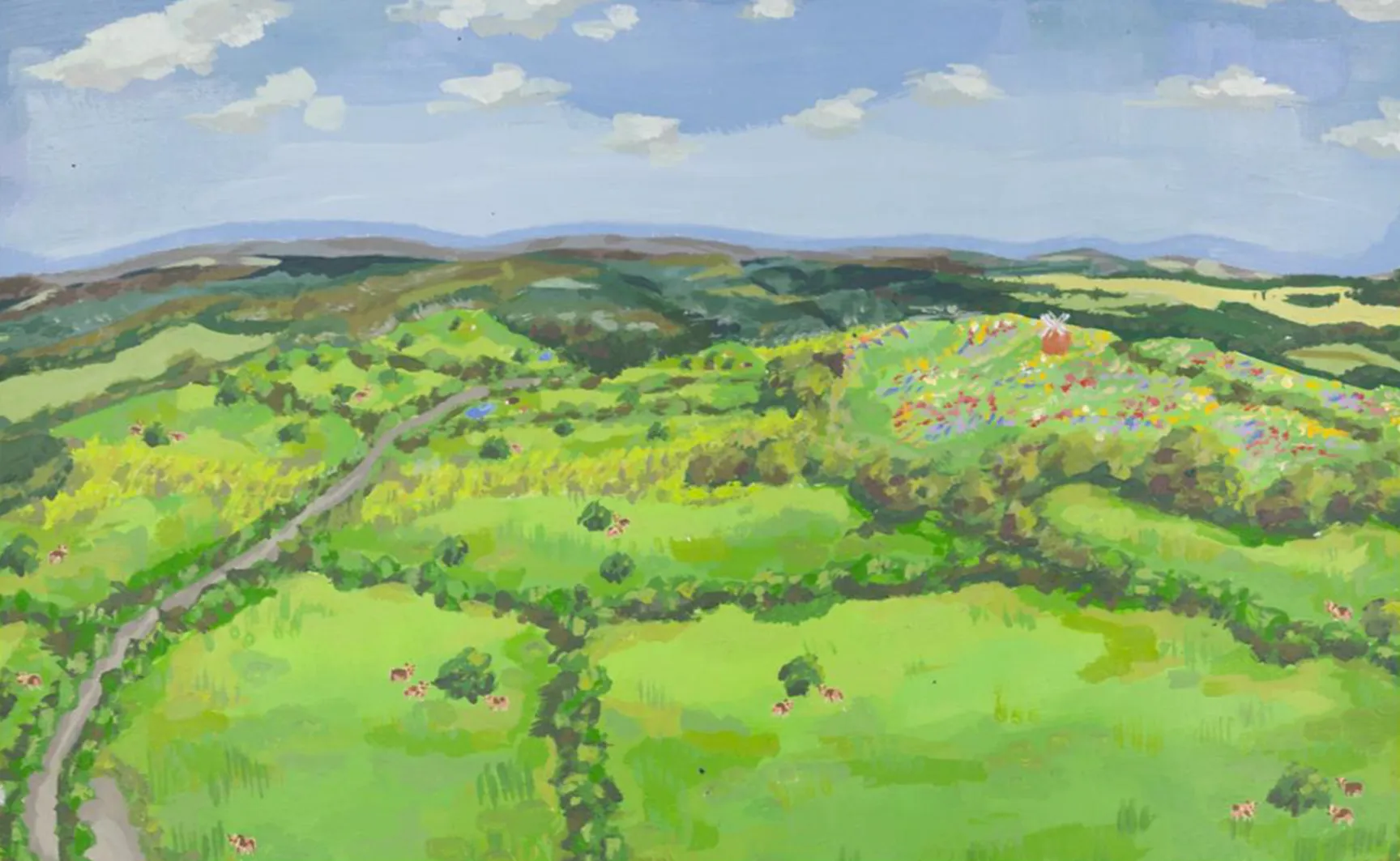
At Halnaker Hill Farm, we’re returning our land to nature after decades of intensive farming. This means 330 acres that were previously a monoculture of wheat, fed by pesticides and chemical fertilisers, are already starting to become a richly diverse haven where a wide variety of plant, insect and bird life can thrive.
All of this is happening under the watchful eye of our team, including ecologists and our Agri-Environment Consultant, Will Atkinson. As the landscape takes its new shape, Will – who comes from a long-established farming family – speaks thoughtfully about the differing views that can exist between environmentalists and farmers.
Will believes the two goals of preserving nature and making a commercial return from land are not mutually exclusive and that there are ways to strike a happy compromise between them.
“Traditionally, there’s always been tension between environmentalists and farmers,” says Will.
“Going back to post-war times in the 1940s and 1950s, ever since intensive farming began, it became production-led. That’s when we lost birds and insects. Farms looked less scruffy, so of course there were no weeds, and biodiversity was lost.
“Then there was a change, when environmentalism came back to the forefront. We had ecologists speaking the language of biodiversity, but sometimes at loggerheads with farmers, because a farmer needs to grow as much yield of whatever crop is being produced. After all, that’s how they make their money. Ecologists want biodiversity, but that usually means lower food production – fewer kilos of meat or tonnes of wheat.”
In more recent times, a third way has emerged – regenerative farming, which brings sustainability and income generation for farmers much more closely together.
Although our focus is on renaturing rather than commercial agriculture, we are introducing sheep and cattle, which will be part of the working life of Halnaker Hill Farm. The herds will exist happily alongside our mission to create a diverse landscape offering more than 850 Biodiversity Net Gain (BNG) units to enable companies and individuals to invest in a greener future.
“Farmers now want to look after their ground; they understand it and they love seeing wildlife – so now there’s more unity,” adds Will. “Of course, our project is not how you would farm traditionally – there are different objectives. It’s far more biodiversity and wildlife-orientated, and that dictates how many animals we can have on the farm.
“However, it’s not an out-and-out rewilding project – that’s one extreme, with monoculture arable at the other. Renaturing is closer to the environment-first model so we’re farming, but always with nature at the forefront.”
To enquire about BNG units for sale, see here.