%20(1).jpg)
February 18, 2026
Cattle, smart collars and how we’re combining traditional farming with technology
Technology and agriculture have always gone hand in hand – from the invention of the first ploughs to the use of drones, robots and even AI on modern farms.
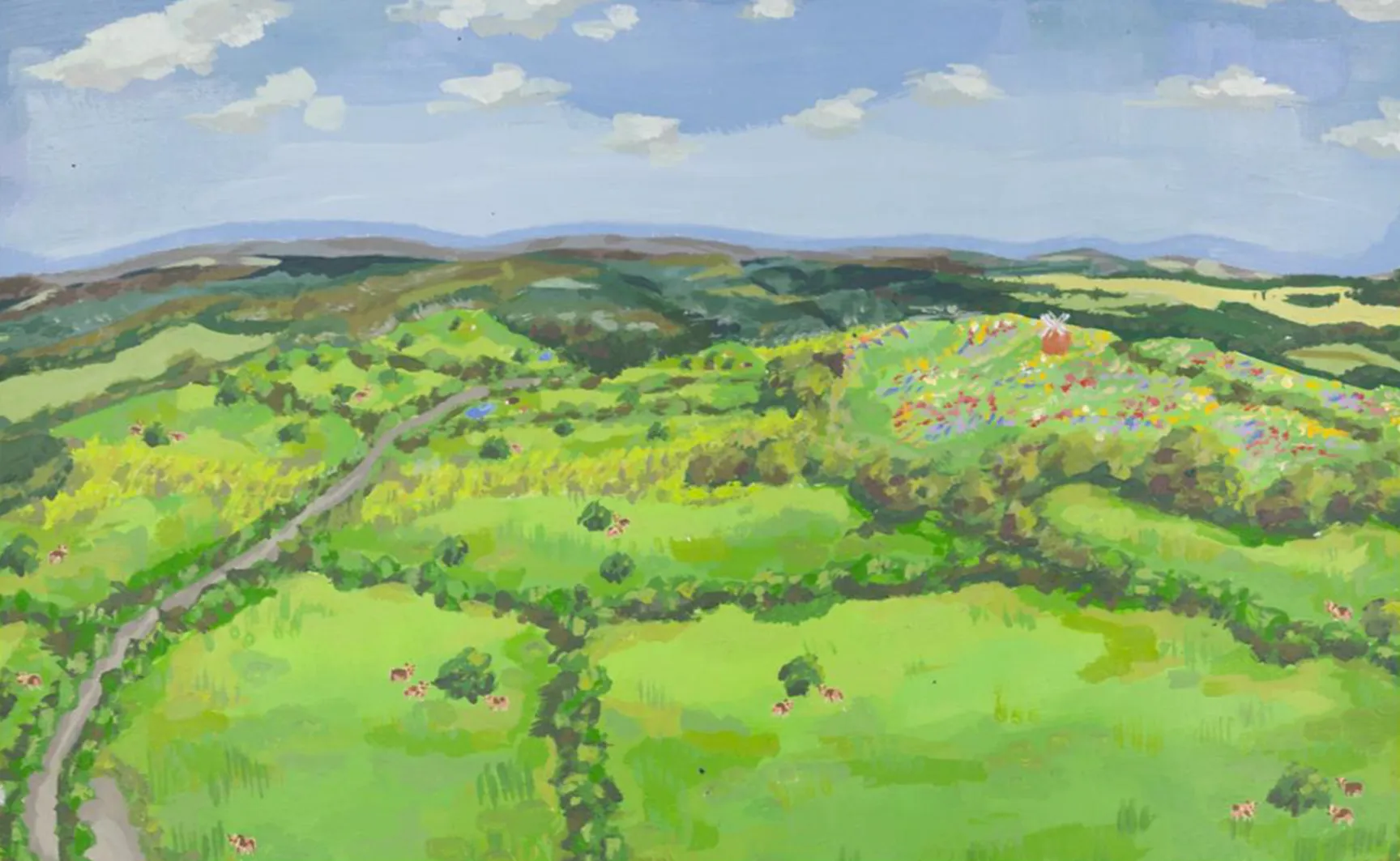
At Halnaker Hill Farm, we’re committed to re-naturing our 330 acres based on maps from the 18th century, using many methods that would be recognisable to farmers from generations ago. However, we will use tech where appropriate, if it enhances our ability to restore the farm efficiently and with as little disruption as possible.
One example of this is the use of ‘virtual fencing’, powered by global positioning system (GPS) technology, which we’ll be introducing this year to help move our grazing cattle across the farm.
These cattle are vital to the farm, not least because their manure creates organic matter, attracting worms and beetles, churning the soil, bringing bacteria and fungi back, and encouraging nature recovery.
To manage the herd’s movements and encourage them to graze a large area, we will be fitting the animals with GPS collars that keep them within an ever-changing boundary.
Will Atkinson, our Agri-Environment Consultant, explains: “There are no physical fences inside the perimeter of the farm, but using GPS collars means I can draw an area on my phone, and as the cattle start getting close to the invisible fence, they’ll start hearing a beep which gets more intense as they get closer.
“Ideally, we want cattle to be grazing half an acre each day, and then the next day they graze a different half-acre - high intensity grazing for a really short period of time, so they trample but don’t over-trample. If you can train the cows to that collar, you can keep them in an area and easily move that area day to day. In a situation like this, tech is our friend.”
For Will, technology is never used for the sake of it – it’s always about minimising the impact of human activity on the land.
“For instance, the first job on every farm is to check on your stock – but you could use a drone to do that from an office,” he says.
“It’s not about being lazy – it’s because every time you drive a vehicle out into a field, you’re compacting the soil and if you didn’t have to do that, it’s a win for the soil. It also frees up time, making everything more efficient.
“So, in farming, we’re always looking for ways to use technology to make it all work smarter, not harder.”