April 29, 2026
It’s not easy being green! Why becoming a fully-grown frog is such a challenge
Life for a tadpole is a brutal business. Only between one and five of every 1,000 will live to become a fully grown frog.
However, even those that don’t ever make it to a lily pad still play a vital role in the food chain, helping to create a thriving ecosystem.
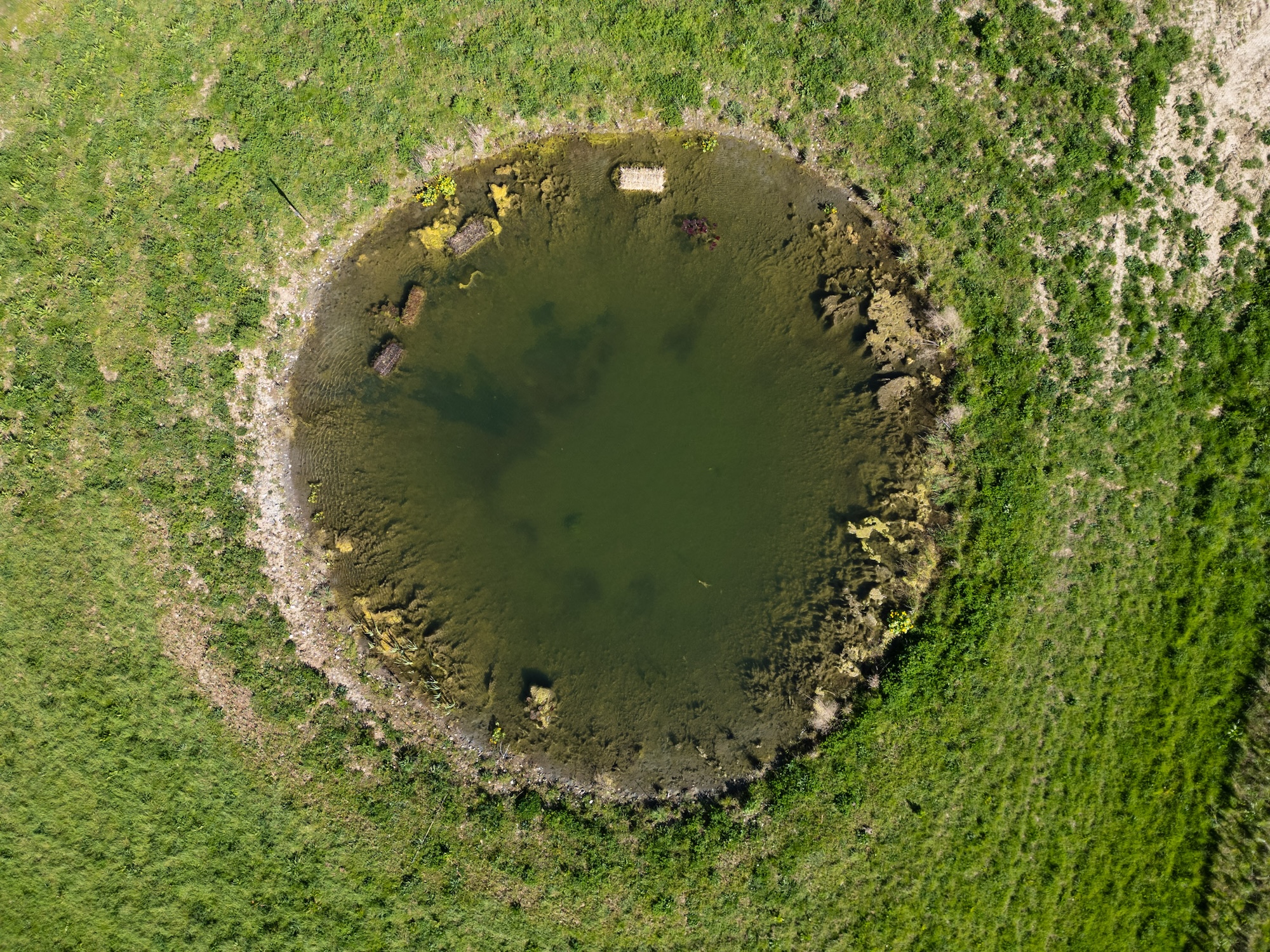
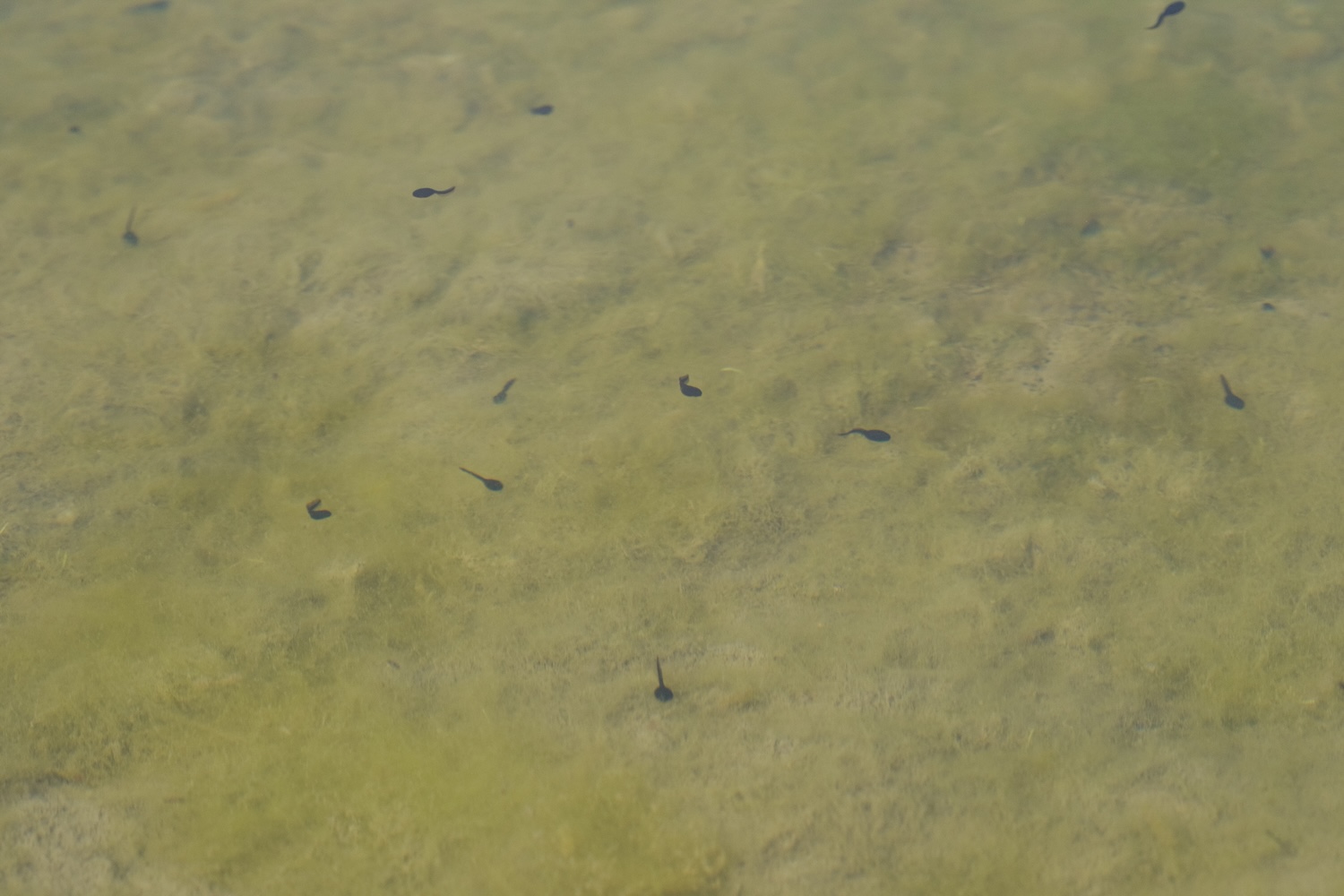
That’s why it’s such a good sign that this Spring we’ve seen plenty of tadpoles in the new ponds we’ve created, especially given that last year’s long, dry summer led to a drop in frog and toad numbers.
“The ponds at Halnaker Hill Farm are coming along nicely,” says Will Atkinson, Agri-Environment Consultant for our project. “Frogs and toads have already found them and this April we’ve had hundreds of tadpoles. Within a month they’ll be turning into froglets – they grow legs, still have a tail for a while, and then suddenly the tail disappears and they become frogs.”
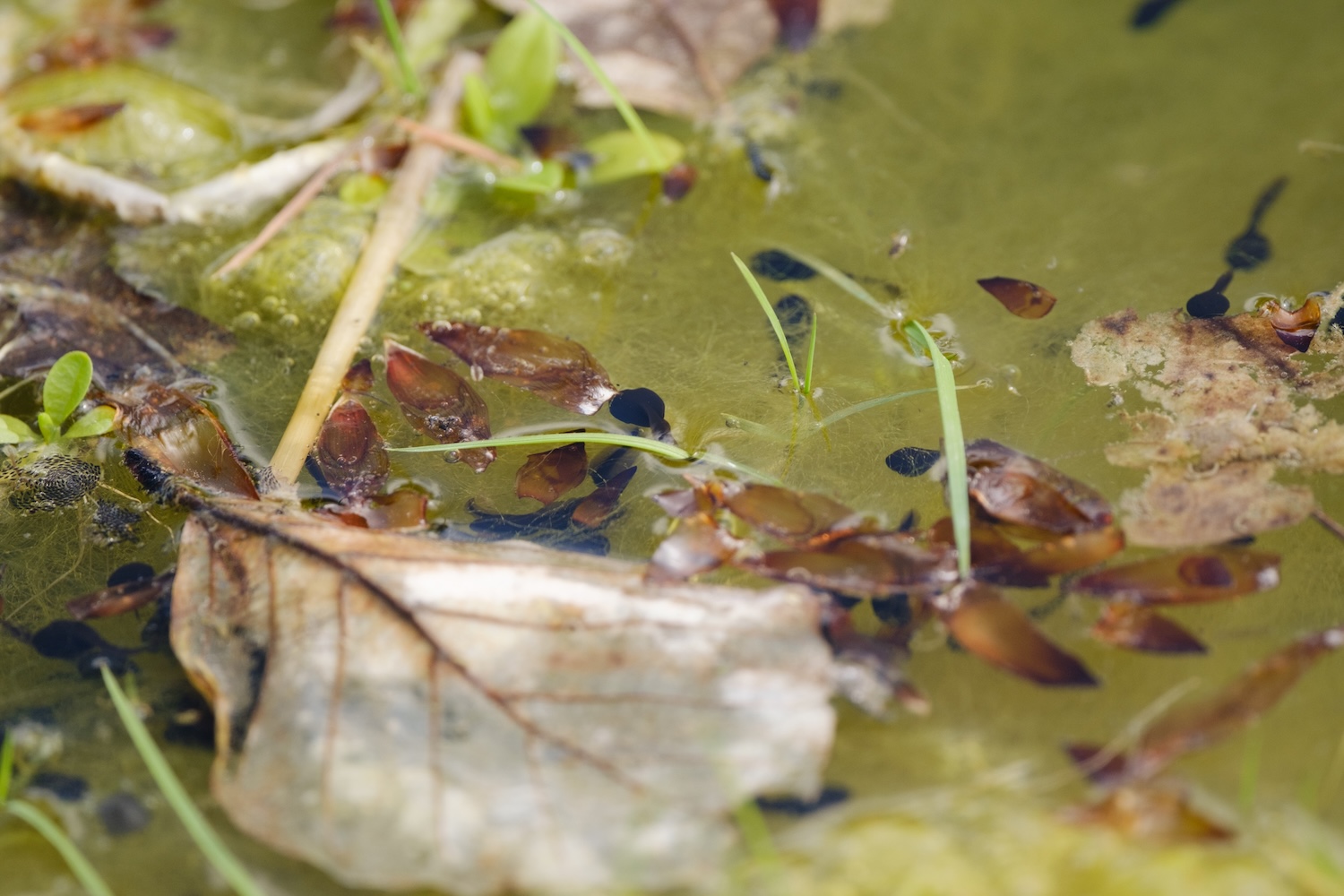
It’s a fascinating transformation – if it’s allowed to happen, because tadpoles live under constant threat from predators.
“They’re basically food for everything,” Will says. “Dragonfly larvae, which are quite large, will eat tadpoles. Once they become froglets, they’re prey for birds like herons and little egrets. Even a good year only sees a tiny proportion reach adulthood. If one makes it through, it has done well!”
You can read all about the importance of ponds at Halnaker Hill Farm in our “Ripple effect” blog here, where we highlight how creating these small bodies of water was one of the first and most effective steps in boosting biodiversity on the farm.
Ponds are just one element of the overall strategy for our project, where we’re returning 330 acres of previously intensely farmed land to its natural state.
Halnaker Hill Farm offers a total of 856 BNG units to be sold to both the mandatory and voluntary markets across the UK to help combat biodiversity loss and climate change.
To find out more and enquire about the purchase of BNG units, click here.